
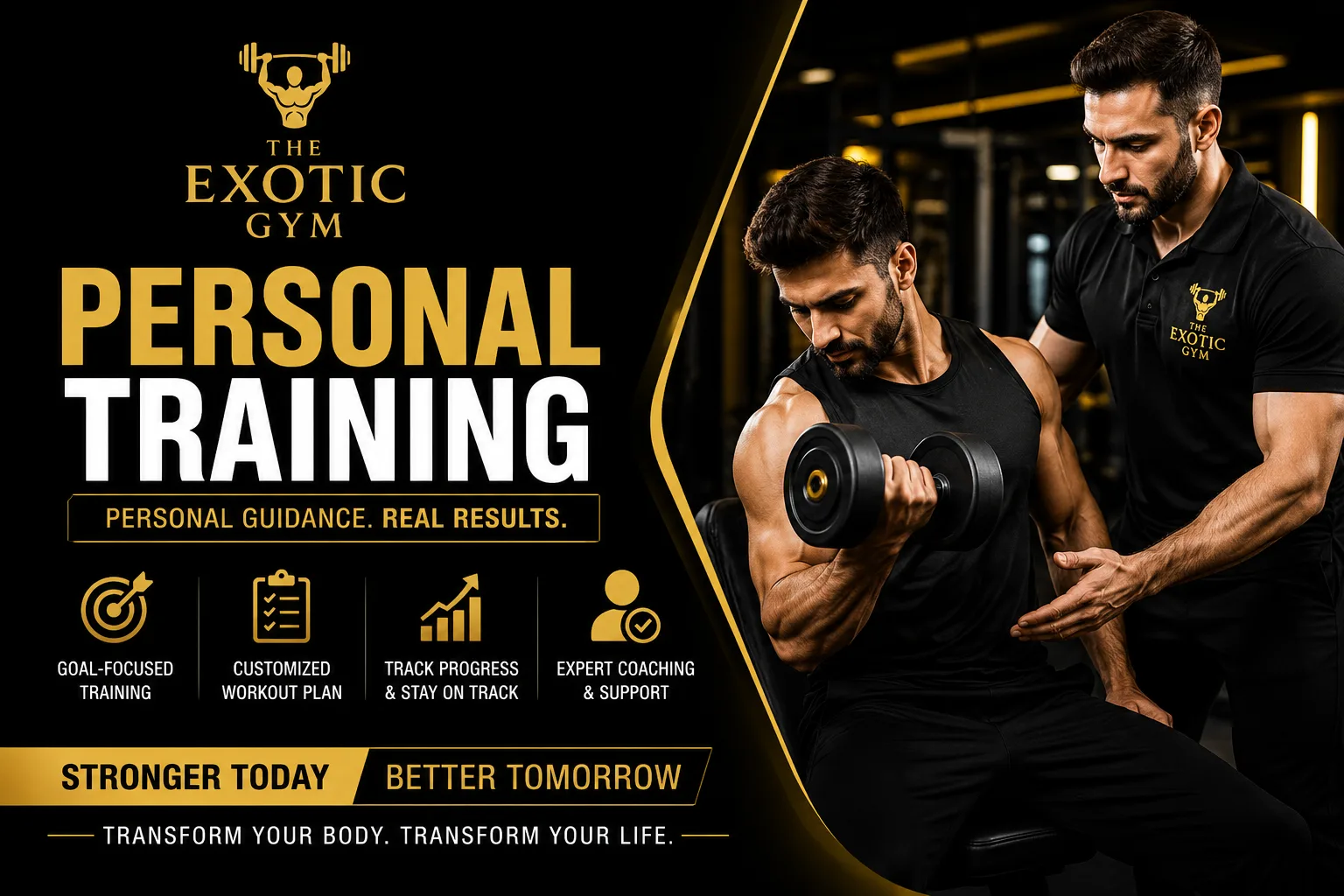
Personal Training in Sonipat: How One-on-One Coaching Helps You Achieve Faster Fitness Results
Walking into a gym for the first time can be both exciting and overwhelming. Modern gyms offer a wide range of equipment, workout styles, and fitness advice, making it difficult to know where to begin. Some people want to lose weight, others hope to build muscle, improve strength, or simply become healthier. While these goals differ, one thing remains the same—having the right guidance often makes the journey easier and more effective.
This is where Personal Training becomes valuable. Instead of following generic workout plans or relying on trial and error, individuals receive one-on-one coaching tailored to their body, fitness level, and personal goals. A structured Personal Training Program helps remove confusion, improves workout quality, and provides continuous support throughout the fitness journey.
Whether someone is a beginner stepping into a gym for the first time or an experienced athlete aiming to break through a plateau, personalized coaching creates a focused path toward measurable progress.
What Is Personal Training?
Personal Training is a customized fitness service where a certified trainer works individually with a client to create and supervise a workout plan based on specific goals, fitness levels, and physical abilities.
Unlike general gym memberships where members exercise independently, one-on-one coaching provides:
-
Individual fitness assessments
-
Customized workout plans
-
Exercise technique correction
-
Progress monitoring
-
Motivation and accountability
-
Safe workout progression
Rather than following a one-size-fits-all routine, every workout is designed to meet the individual's needs and long-term objectives.
Who Can Benefit from Personal Training?
A common misconception is that personal training is only for professional athletes or bodybuilders. In reality, it benefits people from all fitness backgrounds.
Beginners
New gym members often feel unsure about where to start. A Certified Personal Trainer helps build confidence by teaching proper exercise techniques and creating a beginner-friendly fitness routine.
Weight Loss Seekers
Individuals following a Weight Loss Program benefit from structured workouts designed to improve fat loss while preserving muscle and increasing overall fitness.
Working Professionals
Busy schedules often make consistency difficult. A trainer creates efficient workout plans that fit within available time while keeping progress on track.
Muscle Building Enthusiasts
Those aiming to gain lean muscle can follow a customized program focused on progressive strength development and proper recovery.
Athletes
Sports-specific training helps improve performance, strength, endurance, mobility, and injury prevention.
No matter the starting point, a Personal Fitness Coach adapts training according to the individual's goals rather than expecting everyone to follow the same routine.
Why One-on-One Coaching Produces Better Results
Many people spend months exercising without seeing meaningful improvements because they lack direction.
Personal training provides several advantages that help accelerate progress.
Individual Attention
Unlike group sessions, one-on-one coaching allows the trainer to focus entirely on one person's movement, technique, and progress.
Every exercise can be adjusted based on:
-
Fitness level
-
Strength
-
Mobility
-
Recovery capacity
-
Personal goals
This level of attention helps maximize workout quality while reducing unnecessary mistakes.
Proper Exercise Technique
Incorrect exercise form is one of the most common reasons for slow progress and avoidable injuries.
A Personal Trainer ensures every movement is performed correctly by:
-
Correcting posture
-
Improving lifting mechanics
-
Teaching breathing techniques
-
Adjusting exercise positions
Better technique not only improves safety but also helps target the intended muscle groups more effectively.
Customized Workout Plans for Better Progress
Generic workout routines found online may work for some individuals but often fail to consider personal circumstances.
A Customized Personal Training Program takes into account:
-
Current fitness level
-
Age
-
Body composition
-
Lifestyle
-
Training experience
-
Medical considerations
-
Individual goals
This personalized approach allows workouts to evolve as progress is made.
For example, someone focusing on Weight Loss Personal Training may gradually transition into strength-building workouts as body fat decreases and fitness improves.
Accountability Keeps You Consistent
One of the biggest challenges in any fitness journey is staying consistent.
It's easy to postpone workouts when exercising alone.
Working with a Fitness Coach introduces accountability through:
-
Scheduled sessions
-
Regular progress reviews
-
Workout tracking
-
Performance feedback
-
Ongoing encouragement
Knowing someone is monitoring your progress often helps maintain motivation, especially during challenging periods.
Consistency remains one of the strongest predictors of long-term fitness success.
Faster Progress Through Structured Training
Many people spend considerable time in the gym without following a clear plan.
Personal trainers eliminate guesswork by creating structured programs that balance:
-
Strength training
-
Cardiovascular exercise
-
Functional movements
-
Flexibility work
-
Recovery
This organized approach allows members to train with purpose rather than randomly selecting exercises each visit.
A structured Fitness Training Program often leads to more measurable improvements in strength, endurance, body composition, and overall fitness.
Injury Prevention Through Professional Guidance
Incorrect exercise selection or poor lifting technique can increase the risk of injury.
Personal trainers help minimize these risks by:
-
Teaching proper movement patterns
-
Selecting appropriate exercises
-
Adjusting training intensity
-
Monitoring fatigue levels
-
Encouraging proper recovery
Safe training allows members to remain consistent, which is essential for achieving long-term fitness goals.
Tracking Progress Beyond the Weighing Scale
Many individuals judge success only by body weight.
However, meaningful fitness improvements often appear elsewhere first.
A Personal Trainer in Sonipat may monitor:
-
Body measurements
-
Strength improvements
-
Endurance
-
Mobility
-
Workout performance
-
Body composition
-
Progress photographs
These indicators provide a more complete picture of progress than scale weight alone.
Someone may become stronger, leaner, and healthier even when body weight changes gradually.
Motivation During Every Stage of the Journey
Motivation naturally rises and falls.
Some days workouts feel exciting. Other days they feel difficult.
A Personal Fitness Training program helps maintain momentum by providing:
-
Regular encouragement
-
Goal adjustments
-
Positive reinforcement
-
Practical solutions during plateaus
Instead of relying solely on willpower, members develop habits that support long-term consistency.
Over time, these habits become part of a healthier lifestyle rather than temporary efforts.
Why Personal Training Supports Long-Term Success
The goal of personal training extends beyond helping someone complete today's workout.
It focuses on building knowledge, confidence, and sustainable fitness habits that continue long after individual sessions.
By combining customized workout plans, expert coaching, accountability, and continuous progress monitoring, One-on-One Personal Training creates an environment where individuals can safely pursue weight loss, muscle building, strength development, or overall fitness improvement.
For anyone seeking a more focused and effective approach to health and fitness, personalized coaching offers guidance that generic workout plans simply cannot provide. It transforms exercise from a collection of random workouts into a structured journey with clear direction, measurable progress, and long-term results.
Best Personal Training Program for Beginners: Building Strength, Confidence, and Healthy Habits
Joining a gym for the first time is an exciting decision, but it can also feel intimidating. Modern fitness centers are filled with machines, free weights, workout routines, and advice from every direction. For beginners, it's common to wonder where to start, which exercises to perform, or how often to train without risking injury or losing motivation.
Many people begin their fitness journey with enthusiasm, only to stop a few weeks later because they followed unrealistic workout plans or lacked proper guidance. The most successful fitness transformations rarely begin with intense training sessions. Instead, they start with a structured Personal Training Program designed around the individual's current fitness level, goals, and lifestyle.
A beginner-friendly approach focuses on learning proper movement, building confidence, and developing healthy habits that can be maintained for years rather than weeks.
Why Beginners Benefit from Personal Training
One of the biggest challenges for new gym members is information overload. Social media, fitness videos, and online workout plans often recommend advanced exercises that may not be suitable for someone just starting.
Personal Training removes this confusion by providing expert guidance from day one.
Instead of guessing what to do, beginners receive:
-
A clear fitness roadmap
-
Safe workout progression
-
Professional exercise instruction
-
Realistic goal setting
-
Regular progress tracking
This structured approach helps build confidence while reducing the likelihood of common beginner mistakes.
Starting with a Fitness Assessment
Every successful Personal Fitness Training program begins by understanding where the individual currently stands.
Before creating a workout plan, a trainer typically evaluates several important areas.
Current Fitness Level
Understanding existing strength, endurance, flexibility, and cardiovascular fitness helps determine an appropriate starting point.
Body Composition
Rather than focusing only on body weight, trainers may assess body fat levels, muscle mass, and overall physical condition.
Lifestyle and Daily Routine
Work schedules, activity levels, sleep habits, and personal commitments influence workout planning and recovery.
Personal Goals
Some beginners want to lose weight. Others hope to gain muscle, improve mobility, increase strength, or simply become healthier.
Knowing these goals allows a Personal Trainer to design workouts that match individual expectations.
Building Strength One Step at a Time
Many beginners believe they need to lift heavy weights immediately to become stronger.
In reality, strength develops gradually through proper progression.
Early workouts often focus on:
-
Bodyweight movements
-
Basic resistance exercises
-
Controlled lifting techniques
-
Functional movement patterns
These exercises help improve coordination while preparing muscles and joints for more challenging training later.
A well-designed Beginner Personal Training program prioritizes movement quality before increasing workout intensity.
Learning Proper Exercise Techniques
Correct exercise technique is one of the most valuable skills beginners can develop.
Poor form not only reduces workout effectiveness but also increases the risk of injury.
A Certified Personal Trainer helps members learn:
-
Correct posture
-
Safe lifting mechanics
-
Proper breathing techniques
-
Exercise control
-
Full range of motion
These fundamentals create a strong foundation for future progress.
Once proper technique becomes second nature, individuals can train more confidently and effectively.
Setting Realistic Fitness Goals
One reason many beginners lose motivation is unrealistic expectations.
It is common to hear goals such as:
-
"I want to lose 15 kilograms in one month."
-
"I want six-pack abs immediately."
-
"I want to completely transform my body in a few weeks."
While enthusiasm is important, sustainable progress requires realistic planning.
A Personal Fitness Coach helps establish achievable goals based on:
-
Current fitness level
-
Available training time
-
Lifestyle
-
Recovery capacity
-
Long-term objectives
Instead of chasing quick fixes, members focus on gradual improvements that lead to lasting results.
Creating a Sustainable Workout Routine
The best workout plan is not necessarily the hardest one.
It is the one that can be followed consistently.
A beginner-friendly Fitness Training Program often includes:
Strength Training
Two to four sessions each week focusing on major muscle groups.
Cardiovascular Exercise
Walking, cycling, treadmill sessions, or aerobic activities to improve heart health and endurance.
Mobility and Flexibility
Stretching and mobility exercises help improve movement quality while reducing stiffness.
Recovery Days
Rest allows muscles to recover, adapt, and grow stronger between workouts.
This balanced approach prevents burnout while encouraging continuous progress.
Building Healthy Habits Beyond the Gym
Exercise is only one part of becoming healthier.
Long-term fitness also depends on daily habits.
A Personal Trainer in Sonipat often encourages members to focus on:
-
Regular physical activity
-
Consistent workout schedules
-
Proper hydration
-
Adequate sleep
-
Active recovery
-
Positive lifestyle choices
Rather than relying solely on motivation, these habits become part of everyday life.
Small improvements repeated consistently often create remarkable long-term results.
Gaining Confidence Through Consistent Progress
Confidence grows naturally as individuals begin noticing improvements.
Many beginners experience early progress such as:
-
Better balance
-
Increased strength
-
Improved endurance
-
Greater flexibility
-
Higher energy levels
These achievements often happen before dramatic physical changes become visible.
Every successful workout builds confidence and reinforces the belief that long-term goals are achievable.
A structured One-on-One Personal Training program provides encouragement during each stage of this process.
Common Beginner Mistakes Personal Training Helps Prevent
Without proper guidance, beginners often make avoidable mistakes that slow progress.
These include:
Doing Too Much Too Soon
Training intensely every day may lead to fatigue, soreness, and reduced motivation.
Ignoring Technique
Poor movement patterns increase injury risk and reduce exercise effectiveness.
Following Random Online Workouts
Not every workout suits every individual.
Frequently Changing Programs
Consistency generally produces better results than constantly switching routines.
Comparing Yourself to Others
Every fitness journey begins from a different starting point.
Personal training helps individuals focus on their own progress rather than competing with others.
Why One-on-One Coaching Makes a Difference
Unlike general gym memberships, One-on-One Personal Training provides continuous guidance and accountability.
A trainer adjusts workouts as fitness improves, answers questions, corrects technique, and helps members overcome obstacles before they become major setbacks.
This personalized support often leads to:
-
Better workout quality
-
Greater consistency
-
Reduced injury risk
-
Improved confidence
-
Faster measurable progress
The result is a fitness journey that feels structured, achievable, and enjoyable.
Building a Strong Foundation for Lifelong Fitness
The first few months of training often determine whether someone continues exercising or gives up.
Starting with a professionally designed Personal Training Program helps beginners develop proper technique, realistic expectations, healthy habits, and confidence that extends well beyond the gym.
Rather than chasing quick transformations, beginners learn how to build strength gradually, stay consistent, and enjoy the process of becoming healthier.
For anyone beginning their fitness journey, personalized coaching provides the knowledge, support, and structure needed to turn short-term motivation into long-term success.
Why Personalized Workout Plans Deliver Better Results Than Generic Gym Routines
Walk into any gym and you'll often notice something interesting. Two people may be following the exact same workout routine, yet their results look completely different after a few months. One person becomes stronger and leaner, while the other struggles to see noticeable progress despite putting in similar effort.
The difference usually isn't determination—it's personalization.
Every individual has a unique body, fitness history, lifestyle, and goal. A workout that helps one person lose weight may not be effective for someone trying to build muscle or improve athletic performance. This is why professionally designed Personalized Workout Plans have become an essential part of modern Personal Training.
Instead of following generic routines downloaded from the internet or copied from someone else at the gym, personalized programs focus on what works best for one individual. The result is often better progress, improved motivation, fewer injuries, and long-term fitness success.
Why Generic Gym Routines Don't Work for Everyone
The internet offers thousands of free workout plans.
While these routines may provide useful ideas, they are usually designed for a broad audience rather than a specific individual.
Generic gym routines rarely consider:
-
Current fitness level
-
Age
-
Body composition
-
Training experience
-
Lifestyle
-
Recovery ability
-
Previous injuries
-
Personal fitness goals
Following the wrong workout plan may lead to slow progress, frustration, or unnecessary fatigue.
A professionally designed Personal Training Program removes this guesswork by creating workouts based on individual needs rather than general recommendations.
Every Body Responds Differently to Exercise
No two people begin their fitness journey under identical circumstances.
Some individuals naturally gain muscle quickly.
Others respond better to endurance-based training.
Some have excellent mobility, while others may struggle with flexibility or previous injuries.
Factors that influence workout planning include:
-
Body composition
-
Muscle strength
-
Cardiovascular fitness
-
Daily activity levels
-
Age
-
Recovery capacity
A Personal Fitness Coach evaluates these differences before recommending exercises, training intensity, and workout frequency.
This individual approach helps maximize results while reducing unnecessary strain on the body.
Fitness Levels Should Determine Workout Intensity
One of the most common mistakes beginners make is attempting advanced workouts they see online.
While these routines may work for experienced athletes, they are often unsuitable for someone new to exercise.
A Customized Personal Training Program adjusts workout intensity based on current ability.
For example:
Beginners
Focus on learning movement patterns, improving coordination, and building confidence.
Intermediate Members
Increase workout intensity while introducing more challenging strength and conditioning exercises.
Advanced Individuals
Use progressive training techniques designed to improve performance, muscle growth, or athletic development.
Training at the appropriate level helps maintain motivation while reducing injury risk.
Personalized Goal Setting Creates Better Direction
Not everyone joins a gym for the same reason.
Common fitness goals include:
-
Weight loss
-
Muscle building
-
Strength improvement
-
Body transformation
-
Increased endurance
-
Better flexibility
-
Improved athletic performance
Each goal requires a different training strategy.
For example:
Someone following Personal Training for Weight Loss may focus on resistance training, cardiovascular exercise, and calorie-burning workouts.
Someone interested in bodybuilding will follow a completely different structure emphasizing progressive overload, muscle development, and recovery.
A personalized workout plan ensures every exercise supports the individual's long-term objective.
Customized Workout Plans Improve Efficiency
Time is valuable.
Many people only have a few hours each week available for exercise.
A personalized Fitness Training Program helps maximize those hours by focusing on exercises that deliver the greatest benefit.
Rather than randomly selecting machines or repeating the same routine every visit, workouts become purposeful and structured.
This may include:
Strength Training
To improve muscle development and overall strength.
Functional Training
To enhance movement quality and everyday performance.
Cardiovascular Conditioning
To improve endurance and support weight management.
Mobility and Flexibility
To increase joint health and reduce stiffness.
Each workout becomes part of a larger progression rather than an isolated training session.
Progress Tracking Helps Maintain Momentum
One major advantage of One-on-One Personal Training is continuous progress evaluation.
Without tracking, many individuals rely only on the weighing scale.
However, meaningful improvements often appear elsewhere first.
Progress may include:
-
Increased strength
-
Better endurance
-
Reduced body fat
-
Improved flexibility
-
Enhanced workout performance
-
Better posture
-
Increased confidence
A Personal Trainer monitors these changes and adjusts workouts accordingly.
This ongoing evaluation helps ensure the training program continues producing results rather than becoming repetitive.
Personalized Strategies Help Prevent Fitness Plateaus
The human body adapts remarkably well to exercise.
Repeating the same workout month after month often leads to slower progress.
Personalized coaching addresses this by introducing gradual progression through:
-
Increased resistance
-
New exercise variations
-
Different training methods
-
Modified workout volume
-
Progressive overload
These adjustments challenge the body while maintaining safe and sustainable progress.
Instead of feeling stuck, members continue moving toward their goals.
Motivation Improves When Workouts Feel Personal
Many people lose motivation because they don't see how their workouts connect to their personal goals.
A customized Personal Workout Plan creates a stronger sense of purpose.
Each exercise has a reason.
Each session builds on previous progress.
This clarity makes it easier to stay committed even when results take time.
Members also gain confidence as they begin noticing measurable improvements in strength, endurance, and overall fitness.
Reducing Injury Risk Through Individualized Coaching
Exercises that are suitable for one individual may not be appropriate for another.
A Certified Personal Trainer considers:
-
Joint mobility
-
Previous injuries
-
Muscle imbalances
-
Posture
-
Physical limitations
Workouts are then modified to match individual capabilities.
This personalized approach improves safety while allowing members to train consistently without unnecessary setbacks.
Consistency remains one of the most important factors in achieving long-term fitness results.
Why Personalized Coaching Creates Better Long-Term Results
Fitness is not about finding the perfect workout.
It is about finding the right workout for you.
A personalized Personal Training program evolves as your body becomes stronger, fitter, and more confident.
Instead of remaining fixed, workouts change alongside your progress.
This flexibility supports:
-
Sustainable improvement
-
Greater motivation
-
Better performance
-
Higher confidence
-
Long-term habit formation
Rather than following trends or copying someone else's routine, members learn how to train according to their own needs and goals.
Choosing Personalized Training for Lasting Success
Generic gym routines can provide a starting point, but they rarely address the unique challenges, strengths, and goals of each individual.
A professionally designed Customized Personal Training Program combines fitness assessments, personalized workout strategies, progress tracking, and expert coaching to create a training experience that adapts over time.
Whether the objective is weight loss, muscle building, improved strength, or overall health, personalized coaching offers a smarter and more effective path toward achieving lasting fitness results.
When every workout has a purpose and every exercise supports your individual goals, success becomes easier to measure—and far more rewarding to achieve.
Weight Loss, Muscle Gain, or Body Transformation: How Personal Training Adapts to Your Fitness Goals
Ask ten people why they joined a gym, and you'll probably hear ten different answers. One person wants to lose excess weight before an upcoming event. Another hopes to build lean muscle after years of being underweight. Someone else wants to become stronger for sports, while another simply wants to improve energy levels and stay active.
Although these goals are different, many people mistakenly follow the same workout routines they find online or copy from friends. The result is often slow progress, frustration, and confusion about why their efforts aren't producing the expected results.
The truth is that every fitness goal requires a different training strategy. This is where Personal Training makes a significant difference. Instead of following a generic exercise plan, individuals receive a customized program that evolves according to their body, fitness level, and long-term objectives.
Whether the goal is weight loss, muscle gain, strength development, or complete body transformation, personalized coaching creates a focused and structured path toward measurable success.
Every Fitness Goal Requires a Different Approach
There is no universal workout plan that works equally well for everyone.
A person trying to reduce body fat has very different training needs from someone preparing for a powerlifting competition or building muscle mass.
Professional Personal Training begins by understanding questions such as:
-
What is your primary fitness goal?
-
What is your current fitness level?
-
How active is your daily lifestyle?
-
Have you exercised before?
-
Do you have any injuries or physical limitations?
The answers help create a Customized Personal Training Program that matches the individual instead of forcing everyone into the same routine.
Personal Training for Weight Loss
Weight loss remains one of the most common reasons people seek professional coaching.
Many individuals believe that spending hours on a treadmill is the fastest way to lose weight. While cardiovascular exercise is valuable, effective fat loss usually requires a combination of training methods.
A Weight Loss Personal Trainer typically combines:
Strength Training
Resistance exercises help preserve lean muscle while reducing body fat.
Cardiovascular Exercise
Walking, cycling, rowing, and aerobic workouts increase calorie expenditure and improve cardiovascular health.
Functional Movements
Exercises that improve everyday strength, coordination, and mobility.
Progressive Training
Gradually increasing workout intensity to support continuous improvement.
Rather than chasing rapid weight loss, a structured program focuses on sustainable fat reduction while maintaining overall fitness.
Personal Training for Muscle Gain
Building muscle requires more than simply lifting heavy weights.
Muscle development depends on:
-
Progressive overload
-
Proper exercise selection
-
Recovery
-
Training consistency
-
Individual progression
A Muscle Building Personal Trainer creates workouts that target major muscle groups while gradually increasing training demands over time.
Programs often include:
-
Compound strength exercises
-
Isolation movements
-
Structured workout splits
-
Progressive resistance
-
Recovery planning
Each session builds upon previous progress, helping individuals develop lean muscle safely and efficiently.
Personal Training for Strength Development
Strength training is beneficial for far more than competitive athletes.
Improving strength helps with:
-
Better posture
-
Increased confidence
-
Improved mobility
-
Enhanced daily performance
-
Greater physical resilience
A Strength Training Coach develops programs that improve overall power while maintaining proper technique.
Training may include:
-
Squats
-
Deadlifts
-
Bench Presses
-
Pulling movements
-
Functional resistance exercises
As strength increases, workouts are adjusted to ensure continuous progress while reducing injury risk.
Body Transformation Requires More Than Losing Weight
Many people use the term "body transformation" when discussing fitness goals.
However, true transformation goes beyond the number displayed on a weighing scale.
A successful Body Transformation Coach focuses on improving body composition by:
-
Reducing body fat
-
Preserving or building muscle
-
Increasing strength
-
Improving posture
-
Enhancing overall fitness
This balanced approach often produces a leaner, healthier, and stronger physique rather than simply reducing body weight.
Body transformation is about changing how the body performs and looks—not just what it weighs.
Customized Workout Plans Match Individual Needs
One of the biggest advantages of One-on-One Personal Training is personalization.
Every member receives a workout plan designed around factors such as:
Fitness Experience
Beginners require different exercises than experienced gym members.
Body Composition
Training methods vary depending on fat percentage, muscle mass, and overall physical condition.
Lifestyle
Busy professionals may require shorter but highly efficient workouts.
Physical Limitations
Previous injuries or mobility restrictions influence exercise selection.
A personalized approach allows workouts to remain practical, enjoyable, and sustainable.
Progress Tracking Keeps Goals Moving Forward
Without proper tracking, it becomes difficult to know whether training is actually working.
Professional Personal Fitness Coaching regularly evaluates progress using multiple measurements.
These may include:
-
Strength improvements
-
Body measurements
-
Body fat percentage
-
Endurance
-
Workout performance
-
Progress photographs
Tracking allows trainers to identify what is working and make adjustments whenever progress slows.
Instead of repeating the same routine indefinitely, the program evolves as fitness improves.
Training Strategies Change as You Improve
One reason many people stop seeing results is because they continue performing the same workouts for months.
The body naturally adapts to repeated exercise.
A Personal Trainer gradually modifies training by:
-
Increasing resistance
-
Introducing new exercises
-
Adjusting workout intensity
-
Changing repetitions and sets
-
Improving movement complexity
These progressive changes continue challenging the body while preventing fitness plateaus.
Building Healthy Habits That Last
The best Fitness Training Program is one that becomes part of everyday life.
Rather than relying on temporary motivation, personal coaching encourages habits such as:
-
Regular exercise
-
Consistent attendance
-
Proper recovery
-
Active lifestyles
-
Long-term goal setting
Over time, these habits become easier to maintain, making fitness a sustainable part of daily routine instead of a short-term project.
Why One-on-One Coaching Produces Better Long-Term Results
Working independently often means constantly wondering:
-
Am I doing the right exercises?
-
Am I training hard enough?
-
Why have my results stopped?
-
Should I change my workout?
A Personal Fitness Coach removes this uncertainty by providing clear direction throughout every stage of the journey.
Individual coaching offers:
-
Personalized exercise selection
-
Technique correction
-
Continuous motivation
-
Progress monitoring
-
Workout adjustments
-
Goal-focused planning
This support allows members to concentrate on training while knowing their program is designed specifically for them.
Achieving Your Fitness Goals Through Personalized Coaching
Every fitness journey is unique because every individual starts from a different place and has different aspirations.
Whether the objective is losing body fat, building lean muscle, increasing strength, or achieving a complete body transformation, the path to success should be equally individual.
A professionally designed Personal Training Program adapts to changing goals, fitness levels, and progress over time. Through customized workouts, structured progression, expert coaching, and continuous support, personal training provides a practical and sustainable way to achieve meaningful results while building healthier habits that last well beyond the gym.
Common Mistakes People Make Without a Personal Trainer and How Expert Coaching Prevents Them
Joining a gym is often the easy part. Knowing exactly what to do after entering the gym is where many people struggle.
It's common to see beginners walking from one machine to another without a clear plan, copying someone else's workout, or following random fitness videos they found online. While enthusiasm is important, exercising without proper direction can lead to slow progress, frustration, and even injuries.
Many people believe that simply showing up at the gym guarantees results. In reality, the quality of training matters far more than the number of hours spent exercising.
This is one of the biggest reasons why Personal Training has become an important part of successful fitness journeys. A professional trainer doesn't simply count repetitions—they provide structure, correct mistakes, monitor progress, and ensure every workout moves you closer to your goals.
Understanding the most common training mistakes can help explain why expert coaching often produces faster and more sustainable results.
Mistake #1: Using Poor Exercise Form
One of the biggest mistakes beginners make is performing exercises incorrectly.
Improper technique often occurs because people:
-
Copy others in the gym
-
Watch short online videos
-
Lift weights that are too heavy
-
Rush through repetitions
Poor exercise form can reduce workout effectiveness while placing unnecessary stress on joints and muscles.
Common examples include:
-
Rounded backs during deadlifts
-
Partial squats
-
Incorrect bench press technique
-
Swinging weights instead of controlling movement
A Certified Personal Trainer closely observes every exercise and provides immediate corrections.
Learning proper movement patterns from the beginning helps improve results while significantly reducing injury risk.
Mistake #2: Training Without a Clear Plan
Many people arrive at the gym without knowing what they will train.
One day they focus on arms.
The next day they repeat similar exercises.
Sometimes they spend the entire workout doing cardio without understanding how it supports their goals.
Random workouts often produce random results.
A structured Personal Training Program follows a planned progression where every session has a specific purpose.
Workouts are organized according to:
-
Individual fitness goals
-
Current fitness level
-
Recovery capacity
-
Strength development
-
Long-term progression
Having a clear roadmap removes guesswork and keeps training focused.
Mistake #3: Inconsistent Workout Habits
Consistency is one of the biggest predictors of long-term fitness success.
Unfortunately, many people train based on motivation rather than routine.
A common pattern looks like this:
-
Five workouts in one week.
-
No workouts the following week.
-
Returning again with maximum intensity.
This cycle makes steady progress difficult.
A Personal Fitness Coach helps build consistency by creating realistic schedules that fit individual lifestyles.
Regular sessions, accountability, and ongoing encouragement make it easier to maintain momentum over time.
Mistake #4: Overtraining Instead of Training Smarter
Some beginners believe that exercising every day for several hours will produce faster results.
In reality, the body needs time to recover between workouts.
Overtraining may lead to:
-
Persistent fatigue
-
Muscle soreness
-
Reduced performance
-
Increased injury risk
-
Loss of motivation
Professional coaching balances training intensity with proper recovery.
A Personal Trainer understands when to increase workload and when to allow the body sufficient time to adapt.
Recovery is not a sign of weakness—it is an essential part of improving strength and overall fitness.
Mistake #5: Failing to Progress Workouts
The human body adapts quickly to exercise.
Repeating the same workout with the same weights month after month often leads to slower progress.
Many gym members unknowingly remain at the same fitness level because their workouts never evolve.
A Customized Personal Training Program includes progressive overload.
This may involve:
-
Increasing resistance
-
Adding repetitions
-
Introducing new exercises
-
Adjusting workout intensity
-
Improving movement complexity
Gradual progression keeps the body challenged while continuing to build strength and fitness.
Mistake #6: Choosing the Wrong Exercises
Not every exercise is appropriate for every individual.
Someone recovering from an injury requires different movements than an experienced athlete.
Likewise, a beginner trying to lose weight does not necessarily need the same workout as someone preparing for bodybuilding competitions.
A Personal Trainer selects exercises based on:
-
Fitness experience
-
Mobility
-
Strength
-
Body composition
-
Personal goals
This individualized approach improves workout efficiency while reducing unnecessary strain on the body.
Mistake #7: Ignoring Progress Tracking
Many people judge success solely by stepping on a weighing scale.
However, body weight is only one indicator of fitness improvement.
Professional coaching evaluates multiple areas, including:
-
Strength gains
-
Body measurements
-
Endurance
-
Mobility
-
Workout performance
-
Body composition
Tracking these improvements provides a more complete understanding of progress.
It also allows trainers to adjust programs before performance begins to plateau.
Mistake #8: Comparing Yourself to Others
Every fitness journey is unique.
Comparing progress with friends, social media influencers, or experienced gym members often creates unrealistic expectations.
Different individuals have different:
-
Starting points
-
Genetics
-
Recovery abilities
-
Lifestyles
-
Fitness goals
A Personal Fitness Training program focuses on individual improvement rather than competition.
Success is measured by becoming stronger, healthier, and more confident than you were yesterday—not by matching someone else's progress.
How Expert Coaching Prevents These Mistakes
Professional coaching provides much more than workout supervision.
A Fitness Coach helps members:
-
Learn correct exercise techniques
-
Follow structured workout plans
-
Progress safely
-
Avoid unnecessary injuries
-
Stay motivated
-
Build long-term consistency
Instead of relying on trial and error, members receive practical guidance tailored to their needs.
This saves time while improving workout quality and confidence.
Why One-on-One Coaching Creates Better Results
The greatest advantage of One-on-One Personal Training is personalized attention.
Every session allows the trainer to observe movement quality, answer questions, adjust exercises, and provide immediate feedback.
As fitness improves, workouts evolve to match new capabilities.
This individualized approach often produces:
-
Better technique
-
Faster progress
-
Higher motivation
-
Improved consistency
-
Greater confidence
-
Reduced injury risk
Rather than following generic routines, members train with purpose and direction.
Building a Smarter Fitness Journey
Making mistakes is a natural part of learning, but repeating the same mistakes for months can slow progress and reduce motivation.
Poor exercise form, inconsistent workouts, overtraining, lack of progression, and random exercise selection are common obstacles faced by people training alone.
A professionally designed Personal Training Program helps eliminate these challenges through expert coaching, personalized workout plans, structured progression, and continuous support. Instead of wondering whether you're training correctly, you can focus on improving one workout at a time while building healthy habits that support long-term fitness success.
How a Personal Fitness Coach Keeps You Motivated, Accountable, and Consistent Throughout Your Journey
Starting a fitness journey is usually driven by motivation. A new gym membership, a health goal, or the desire to feel stronger often inspires people to take the first step. During the first few weeks, it's easy to stay excited. Workouts feel new, progress seems visible, and energy levels begin to improve.
The real challenge begins after that initial excitement fades.
Busy work schedules, family responsibilities, stress, travel, or slower-than-expected results often make people skip workouts. Missing one session becomes two, then an entire week passes, and before long, the routine disappears completely.
This is one of the biggest reasons why many people struggle to achieve long-term fitness goals. The problem isn't always a lack of effort—it is a lack of consistency.
A Personal Fitness Coach helps bridge this gap by providing accountability, structured guidance, regular progress reviews, and continuous motivation. Instead of relying solely on willpower, members develop habits that make fitness a sustainable part of everyday life.
Why Motivation Alone Isn't Enough
Motivation is a great way to begin a fitness journey, but it naturally changes over time.
Some days you feel energetic and ready to train.
Other days work becomes hectic, the weather changes, or you simply don't feel like exercising.
If motivation is the only reason you work out, consistency becomes difficult.
Successful fitness journeys rely more on habits than emotions.
This is where Personal Training becomes valuable. A structured program creates a routine that continues even when motivation temporarily declines.
Accountability Creates Consistency
One of the biggest advantages of working with a Personal Trainer is accountability.
When people train alone, it is easy to postpone workouts.
Common thoughts include:
-
"I'll go tomorrow."
-
"I'll start again next week."
-
"One missed workout won't matter."
Although these decisions seem small, they often become long breaks from exercise.
A Personal Fitness Coach helps reduce this pattern by providing:
-
Scheduled workout sessions
-
Regular check-ins
-
Progress reviews
-
Performance monitoring
-
Ongoing encouragement
Knowing someone is invested in your success often increases commitment and makes it easier to maintain consistency.
Structured Planning Removes Daily Confusion
Many people waste valuable time deciding what to do after arriving at the gym.
Questions like these are common:
-
Which muscle group should I train today?
-
How many sets should I perform?
-
Should I do cardio or strength training?
-
Am I making progress?
A Customized Personal Training Program answers these questions before the workout even begins.
Each session has a clear objective based on your fitness goals.
Instead of randomly choosing exercises, you simply focus on completing the planned workout.
This structure saves time while improving workout quality.
Progress Reviews Keep You Moving Forward
Fitness improvements don't always happen in a straight line.
Some weeks progress feels rapid.
Other weeks improvements seem slower.
Without proper tracking, many individuals incorrectly assume they are no longer improving.
A Personal Training Program includes regular progress evaluations such as:
-
Strength improvements
-
Body measurements
-
Endurance testing
-
Workout performance
-
Body composition
-
Progress photographs
These reviews help identify improvements that may not appear on the weighing scale.
Seeing measurable progress often renews motivation and reinforces commitment.
Building Healthy Habits Instead of Temporary Motivation
One of the most valuable roles of a Fitness Coach is helping members develop sustainable habits.
Rather than focusing only on today's workout, coaching encourages routines that become part of daily life.
Examples include:
-
Scheduling workouts in advance
-
Staying active throughout the day
-
Prioritizing recovery
-
Exercising consistently
-
Maintaining realistic expectations
Over time, these habits require less mental effort because they become regular parts of a healthy lifestyle.
Long-term success usually comes from repeating small positive actions rather than relying on occasional bursts of motivation.
Overcoming Fitness Plateaus
Almost every fitness journey reaches a point where progress slows.
This stage, commonly known as a plateau, often causes frustration.
People may begin asking:
-
Why has my weight stopped changing?
-
Why am I no longer getting stronger?
-
Should I completely change my workouts?
In many cases, plateaus simply indicate that the body has adapted to the current training routine.
A Certified Personal Trainer responds by making strategic adjustments such as:
-
Increasing workout intensity
-
Introducing new exercises
-
Changing repetitions and sets
-
Modifying training volume
-
Improving exercise technique
These gradual changes help restart progress while maintaining safe and effective training.
Motivation Through Small Achievements
Many people focus only on their final goal.
For example:
-
Losing 20 kilograms.
-
Building visible muscle.
-
Completing a body transformation.
While these goals are important, they may take several months to achieve.
A Personal Fitness Coach encourages members to celebrate smaller victories along the way.
Examples include:
-
Completing every workout for a month
-
Increasing lifting strength
-
Running longer distances
-
Improving flexibility
-
Learning proper exercise technique
These milestones create confidence and help maintain enthusiasm throughout the journey.
Personalized Support During Challenging Periods
Life rarely follows a perfect routine.
Work deadlines, illness, travel, family events, and unexpected responsibilities can interrupt training schedules.
Without support, many individuals stop exercising completely during these periods.
A Personal Trainer helps adjust the program when circumstances change.
This may involve:
-
Shorter workouts
-
Alternative exercises
-
Recovery-focused sessions
-
Temporary training modifications
Instead of abandoning fitness goals, members learn how to adapt while maintaining consistency.
This flexibility makes long-term success much more realistic.
Confidence Grows with Every Workout
Many beginners enter the gym feeling uncertain.
They worry about:
-
Using equipment incorrectly
-
Looking inexperienced
-
Choosing the wrong exercises
-
Falling behind others
A One-on-One Personal Training program creates a supportive environment where members receive continuous guidance.
As technique improves and progress becomes visible, confidence naturally increases.
Over time, the gym transforms from an unfamiliar place into a comfortable part of daily life.
Why Consistency Matters More Than Perfection
One missed workout does not prevent success.
Likewise, one perfect week does not guarantee long-term results.
Fitness is built through consistent effort repeated over months and years.
A Personal Training Program emphasizes:
-
Showing up regularly
-
Following structured workouts
-
Tracking progress
-
Learning from setbacks
-
Continuing despite temporary challenges
This mindset removes the pressure of perfection while encouraging sustainable improvement.
Building Long-Term Success with Personal Coaching
Lasting fitness results rarely come from short periods of extreme effort. They are built through consistent training, realistic planning, continuous learning, and healthy habits that fit into everyday life.
A Personal Fitness Coach provides much more than workout instruction. They become a source of accountability, motivation, guidance, and ongoing support throughout every stage of the journey.
By combining personalized coaching, regular progress reviews, structured workout plans, and practical habit-building strategies, Personal Training helps individuals stay committed even when motivation fluctuates. Over time, this consistency becomes the foundation for achieving weight loss, building strength, improving fitness, and maintaining a healthier lifestyle for years to come.
Choosing the Right Personal Trainer: Qualities That Make a Real Difference in Your Fitness Journey
Joining a gym is an investment in your health, but choosing the right personal trainer can be just as important as choosing the right fitness center. A knowledgeable trainer does much more than demonstrate exercises or count repetitions. They become your coach, guide, motivator, and accountability partner throughout your fitness journey.
Many people believe that every trainer provides the same level of support. In reality, coaching styles, experience, communication skills, and training methods can vary significantly. Selecting a trainer based only on availability or cost may not always lead to the best experience.
Whether your goal is weight loss, muscle gain, strength development, or improving overall fitness, working with the right Personal Trainer can make your workouts safer, more effective, and easier to maintain over the long term.
Understanding what qualities to look for helps you choose a fitness professional who genuinely supports your success.
Why the Right Personal Trainer Matters
Fitness goals often take months of consistent effort to achieve.
During that time, you'll rely on your trainer for:
-
Workout guidance
-
Exercise correction
-
Motivation
-
Progress tracking
-
Goal adjustments
-
Long-term planning
A trainer who understands your goals and communicates effectively can make your fitness journey more enjoyable and productive.
On the other hand, poor coaching can lead to confusion, inconsistent progress, and unnecessary frustration.
Choosing the right Personal Fitness Coach means choosing someone who understands both exercise science and individual needs.
Professional Knowledge and Qualifications
One of the first qualities to consider is professional knowledge.
A Certified Personal Trainer should understand:
-
Human anatomy
-
Exercise techniques
-
Strength development
-
Weight loss principles
-
Injury prevention
-
Progressive training methods
Certification alone does not guarantee excellence, but it demonstrates a commitment to learning professional fitness practices.
A knowledgeable trainer stays updated with modern training approaches while adapting workouts according to individual fitness goals.
Practical Coaching Experience
Experience plays an important role in effective coaching.
Over time, trainers work with people of different:
-
Fitness levels
-
Body types
-
Ages
-
Goals
-
Physical limitations
This practical experience helps them recognize common challenges and adjust workouts accordingly.
For example, a trainer who has guided beginners, working professionals, athletes, and individuals pursuing Weight Loss Personal Training understands that every member progresses differently.
Experience allows coaching decisions to become more practical rather than relying only on theory.
Strong Communication Skills
Knowledge alone is not enough.
A trainer should also be able to explain exercises clearly and confidently.
Good communication includes:
-
Simple exercise instructions
-
Constructive feedback
-
Encouragement
-
Active listening
-
Answering questions patiently
Many beginners feel hesitant about asking questions.
A trainer who creates a comfortable learning environment helps members feel more confident while improving workout quality.
Effective communication builds trust and strengthens the relationship between coach and client.
Personalized Attention Makes Every Workout More Effective
One of the greatest advantages of One-on-One Personal Training is individualized coaching.
Every person enters the gym with different goals, strengths, and limitations.
A quality trainer pays attention to:
-
Exercise technique
-
Recovery
-
Mobility
-
Fitness level
-
Workout intensity
-
Personal progress
Instead of giving every member the same workout, personalized coaching ensures exercises match the individual's needs.
This customized approach often produces better long-term results than generic gym routines.
Goal-Oriented Workout Planning
Every fitness goal requires a different strategy.
Someone aiming to lose body fat follows a different training plan than someone preparing for bodybuilding or improving athletic performance.
A skilled Personal Trainer develops workouts based on goals such as:
Weight Loss
Combining resistance training, cardiovascular exercise, and functional workouts.
Muscle Building
Progressive overload and structured strength training.
Strength Development
Compound lifting techniques with gradual progression.
General Fitness
Balanced programs that improve endurance, flexibility, mobility, and overall health.
Goal-specific planning keeps workouts focused and measurable.
Correcting Exercise Technique
One of the most valuable roles of a trainer is correcting movement patterns.
Incorrect exercise form may:
-
Reduce workout effectiveness
-
Increase injury risk
-
Slow progress
-
Create muscle imbalances
A Personal Fitness Training session allows trainers to monitor every repetition.
Immediate corrections help members learn proper technique from the beginning, creating safer and more productive workouts.
Motivation During Challenging Phases
Every fitness journey includes difficult periods.
Motivation naturally changes due to:
-
Busy schedules
-
Work pressure
-
Family responsibilities
-
Plateaus
-
Temporary setbacks
A good trainer understands these challenges.
Instead of expecting perfection, they provide encouragement, adjust workouts when necessary, and help members remain focused on long-term goals.
This ongoing support often prevents people from giving up during difficult phases.
Progress Tracking and Continuous Improvement
Successful coaching involves regular evaluation rather than repeating the same workout indefinitely.
A professional Fitness Coach monitors progress through:
-
Strength improvements
-
Workout performance
-
Body measurements
-
Body composition
-
Endurance
-
Mobility
As members improve, workouts evolve accordingly.
Increasing resistance, introducing new exercises, and modifying training intensity help maintain steady progress while preventing plateaus.
Building Trust and Long-Term Relationships
Fitness coaching works best when members trust their trainer.
Trust develops through:
-
Honest communication
-
Consistent support
-
Professional behaviour
-
Reliable guidance
-
Genuine interest in client success
A trainer who celebrates achievements while providing realistic expectations creates an environment where members feel comfortable discussing challenges and asking for help.
This partnership often becomes one of the strongest factors contributing to long-term fitness success.
Questions to Ask Before Choosing a Personal Trainer
Before starting a Customized Personal Training Program, consider asking questions such as:
-
What experience do you have working with beginners?
-
How do you customize workout plans?
-
How is progress measured?
-
How do you adjust training when goals change?
-
What approach do you use for injury prevention?
-
How do you keep members motivated over time?
The answers often provide valuable insight into the trainer's coaching philosophy and communication style.
Why the Right Trainer Helps You Achieve Better Results
Fitness is not simply about exercising harder.
It is about exercising smarter.
The right Personal Trainer in Sonipat combines professional knowledge, practical experience, personalized coaching, motivation, and structured planning to create an environment where members can succeed.
Rather than following random workout routines, individuals receive expert guidance tailored specifically to their goals and abilities.
Choosing a Fitness Professional Who Supports Your Success
The best trainer is not necessarily the one with the loudest personality or the most impressive social media presence. The right trainer is someone who listens carefully, understands your goals, adapts workouts to your fitness level, and supports your progress every step of the way.
A professionally designed Personal Training Program becomes far more effective when guided by an experienced coach who values communication, safety, personalization, and continuous improvement. By choosing the right fitness professional, you create a stronger foundation for achieving lasting results, building healthy habits, and enjoying a more confident and rewarding fitness journey.
Personal Training vs Regular Gym Membership: Which Option Is Better for Achieving Your Fitness Goals?
Choosing a gym membership is often the first step toward becoming healthier, stronger, or more active. However, many people face another important question before they begin:
Should I choose a regular gym membership or invest in personal training?
Both options offer valuable benefits, but they serve different purposes. Some individuals are comfortable planning their own workouts and exercising independently. Others prefer expert guidance, structured programs, and continuous support to help them stay on track.
The right choice depends on your fitness goals, experience level, motivation, and the kind of results you want to achieve. Understanding the differences between Personal Training and a standard gym membership can help you make an informed decision that supports your long-term fitness journey.
Understanding a Regular Gym Membership
A regular gym membership provides access to fitness equipment and facilities where members can work out independently.
Most memberships include:
-
Cardio machines
-
Strength training equipment
-
Free weights
-
Functional training areas
-
Stretching zones
This option works well for individuals who already understand exercise techniques and can confidently design their own workout routines.
However, a gym membership alone does not usually include personalized coaching, progress monitoring, or customized workout planning.
Your results largely depend on your own knowledge, consistency, and ability to stay motivated.
What Personal Training Offers
Personal Training combines gym access with professional coaching designed specifically for the individual.
Instead of following generic routines, members receive:
-
Individual fitness assessments
-
Customized workout plans
-
Exercise technique correction
-
Progress tracking
-
Goal-based training strategies
-
Continuous motivation and accountability
A Personal Trainer adapts every session according to your fitness level, experience, and long-term objectives.
This personalized approach removes uncertainty and allows members to train with confidence.
Personalized Coaching vs Independent Workouts
One of the biggest differences between these two options is the level of guidance.
With a regular gym membership, members often decide:
-
Which exercises to perform
-
How much weight to lift
-
How often to train
-
When to increase intensity
Without experience, these decisions can become confusing.
A One-on-One Personal Training program eliminates guesswork by creating a structured roadmap that evolves as progress improves.
Instead of wondering what to do each day, every workout has a clear purpose.
Cost vs Long-Term Value
Many people initially compare these options based only on price.
A regular gym membership generally has a lower monthly cost.
Personal training requires a larger investment because it includes professional coaching and individualized attention.
However, value should be measured by the quality of results rather than cost alone.
For example:
Someone who spends a year paying for a gym membership but rarely attends may invest less money while achieving very little progress.
On the other hand, someone following a structured Personal Training Program may achieve measurable improvements through consistent coaching and efficient workouts.
Looking beyond the monthly fee often provides a better understanding of long-term value.
Workout Effectiveness
Working harder does not always mean working smarter.
Many gym members spend considerable time exercising without following a structured progression.
Common problems include:
-
Repeating the same workouts
-
Poor exercise technique
-
Random exercise selection
-
Lack of progression
-
Inconsistent routines
A Personal Fitness Coach designs workouts that align with specific goals such as:
-
Weight loss
-
Muscle building
-
Strength development
-
Body transformation
-
General fitness improvement
Every exercise supports a larger training strategy, making workouts more focused and productive.
Which Option Produces Better Long-Term Results?
Long-term success depends on consistency.
For experienced individuals who understand programming and exercise technique, a regular membership may be sufficient.
For beginners or those struggling to achieve results, personal training often provides additional advantages.
These include:
-
Better accountability
-
Safer exercise techniques
-
Continuous motivation
-
Structured progression
-
Professional feedback
Having expert guidance helps many individuals remain committed even when motivation decreases.
Body Transformation Requires More Than Equipment
Many people believe that access to modern gym equipment automatically leads to better results.
In reality, equipment is only one part of the equation.
Successful body transformation depends on:
-
Proper workout planning
-
Correct exercise execution
-
Progressive overload
-
Recovery
-
Consistency
A Body Transformation Coach helps combine these elements into a structured plan that evolves as your body changes.
Rather than relying on random workouts, members follow a system designed specifically for their goals.
Personal Training Helps Beginners Build Confidence
For someone new to fitness, walking into a gym can feel overwhelming.
Questions often include:
-
How do I use this machine?
-
Which workout should I start with?
-
Am I exercising correctly?
-
What if I get injured?
A Certified Personal Trainer answers these questions while teaching proper movement patterns from the beginning.
Learning correct techniques early builds confidence and creates a stronger foundation for future progress.
Accountability Makes a Big Difference
One of the biggest reasons people stop exercising is inconsistency.
Without accountability, skipping one workout can quickly become several missed weeks.
A Personal Fitness Coach provides regular support through:
-
Scheduled sessions
-
Goal reviews
-
Progress evaluations
-
Workout adjustments
-
Encouragement during challenging periods
This ongoing guidance helps members develop routines that become sustainable over time.
Which Option Is Right for Different Types of People?
Regular Gym Membership May Be Suitable If You:
-
Already understand proper exercise techniques.
-
Can create your own workout plans.
-
Stay motivated without external support.
-
Have experience progressing workouts safely.
Personal Training May Be Better If You:
-
Are new to fitness.
-
Want faster and more structured progress.
-
Need accountability to stay consistent.
-
Have specific goals such as weight loss, muscle gain, or body transformation.
-
Prefer expert guidance throughout your journey.
Choosing the right option depends on your current experience and the level of support you need to succeed.
Making the Most of Your Fitness Investment
Whether you choose a standard membership or a Customized Personal Training Program, consistency remains the most important factor.
Showing up regularly, following a structured plan, and gradually improving over time will always produce better results than short periods of intense effort followed by long breaks.
The best investment is the one that helps you maintain healthy habits for years rather than weeks.
Which Fitness Approach Delivers Better Results?
There is no single answer that fits everyone.
A regular gym membership offers flexibility and independence, making it suitable for experienced individuals who already know how to train effectively.
Personal Training, however, provides expert coaching, personalized workout plans, continuous motivation, and progress tracking that many beginners and goal-focused individuals find invaluable. It transforms exercise from a collection of random workouts into a structured system built around your unique needs.
If your priority is learning proper techniques, staying accountable, avoiding common mistakes, and achieving measurable progress with greater confidence, working with a Personal Trainer can provide the guidance and support needed to turn fitness goals into lasting results.

